
Before ordering PVC boards for kitchen cabinets, test the connection and the loaded component. A density number and a smooth white face cannot confirm whether a particular hinge or shelf design will perform as intended.
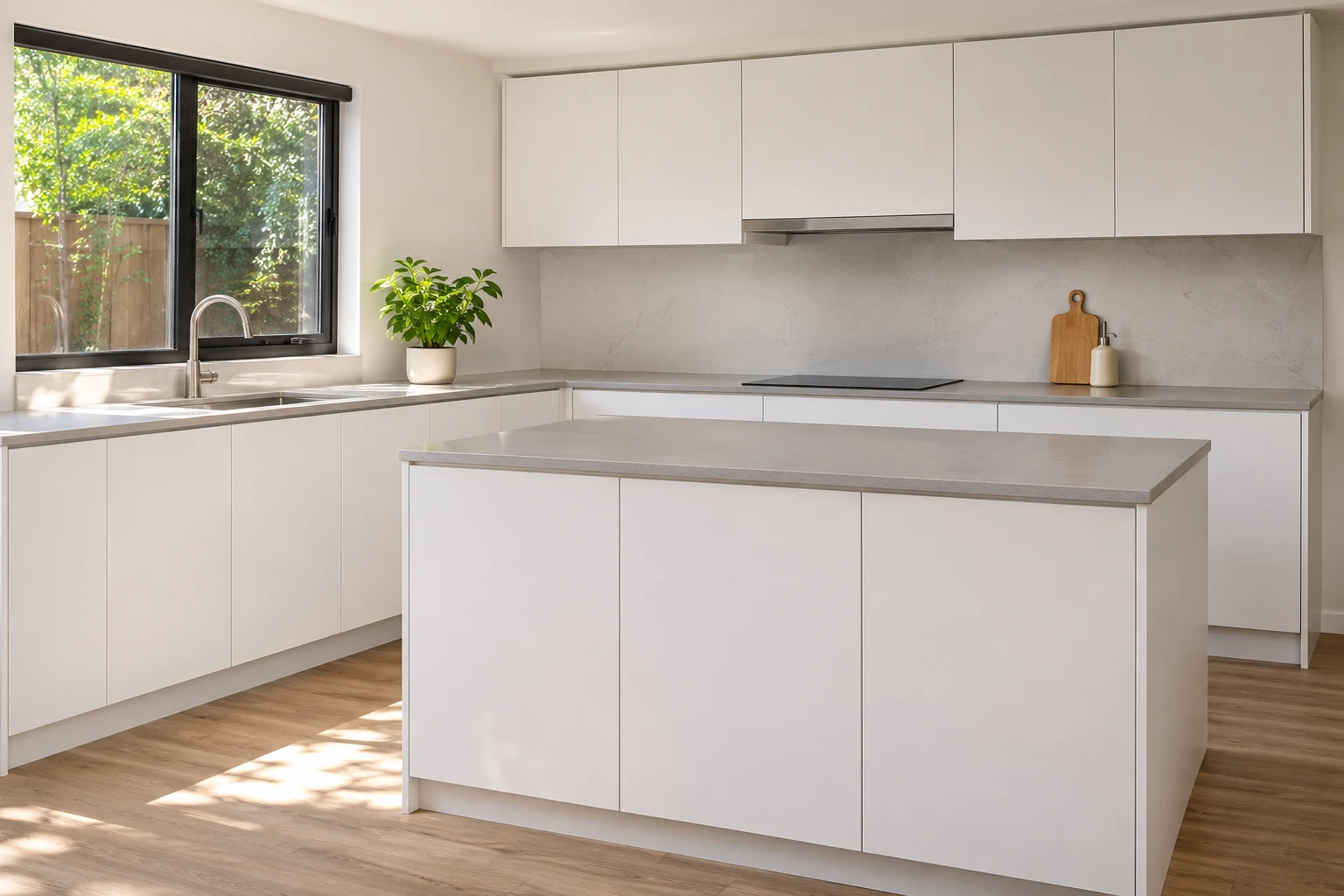
Divide the cabinet into parts
Prepare a component list for sides, dividers, doors, backs and shelves. For each part, record finished size, thickness, finish, support and hardware. Keep back panels and lightly loaded dividers separate from shelves and hinge-bearing parts. Start with the 15mm Celuka Cabinet Panel when reviewing a 15 mm design, and compare other thicknesses where the drawing requires them.
Compare 0.55, 0.60 and 0.65 fairly
Use samples of the same actual thickness and comparable dimensions. Record measured thickness, mass, face condition and cut edge before machining. A higher-density board has more mass at the same volume, but does not provide a universal load rating. Do not substitute a density comparison for a finished-component test.
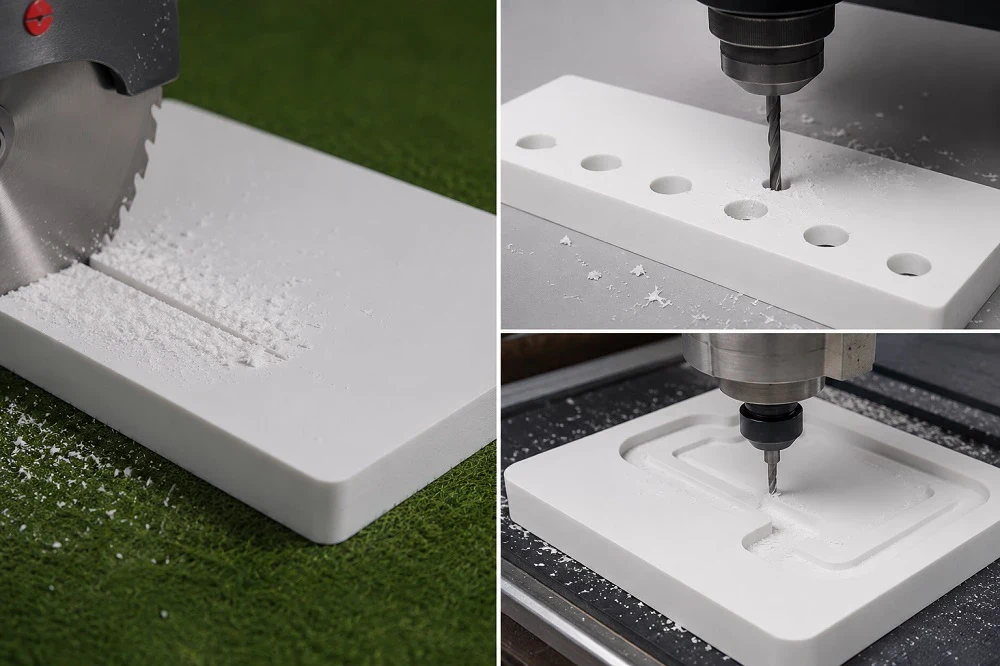
Trial the intended hinge and fasteners
Use your production drill, recess depth, screw type and edge distance. Assemble a representative door and cabinet side rather than testing a screw in an arbitrary offcut. Inspect local crushing, splitting, screw movement and hinge alignment. Agree a practical opening-and-closing trial with your hardware supplier or test laboratory, and record the method and acceptance limits.
Test shelf span before buying a container
Build the shelf at the intended width, depth and thickness with the actual support arrangement. Apply the expected distributed load and any foreseeable concentrated load under a documented procedure. Measure deflection initially and over the agreed test period; inspect recovery after unloading. Record temperature, duration and support details. If the result is unsuitable, review span, center support, stiffening or thickness as well as grade.
Check surfaces, edges and assembly
Trial your finish, adhesive and edge banding on the selected board. Inspect the routed edge and hinge recess for a clean finish. If the assembly may be exposed to moisture, review joints, fixing holes, adhesives and hardware together. The board’s resistance to water does not establish the performance of every assembled cabinet.
Write a part-by-part purchasing schedule
Specify thickness, density, sheet size, finish, quantity and packing for each line. Include approved sample references and agreed tolerances. Request any required independent reports before order confirmation, ensuring the report identifies the relevant grade, specimen and test method. Avoid accepting an unrelated report as evidence for the exact board being ordered.
What to send us
Share your cabinet drawing or component list, hinge and screw details, shelf span and intended load, visible-face requirements, quantities and destination. We can discuss sample grades and mixed-container supply. For quantity planning, continue with our kitchen cabinet order planning guide; for the starting board, see 15mm Celuka Cabinet Panel.
Not sure which grade to order? Send your application, finished size, processing method, quantity and destination to our selection team. Celina Yue · WhatsApp +86 18053328687 · Celinayue@kaichuangplastic.com.