
Start with a sample that answers a buying question
A distributor choosing stock, a cabinet maker checking a door panel and an interior contractor approving a decorative face need different information. Tell us the intended use before requesting a sample. This helps the export team identify which board grade, thickness and finish should be discussed.
A small sample is useful for reviewing the face, colour, core and cut edge. It cannot establish how a full sheet or a completed cabinet will perform. Where the application depends on machining, a finish system or hardware, arrange a representative trial with the actual equipment and components.
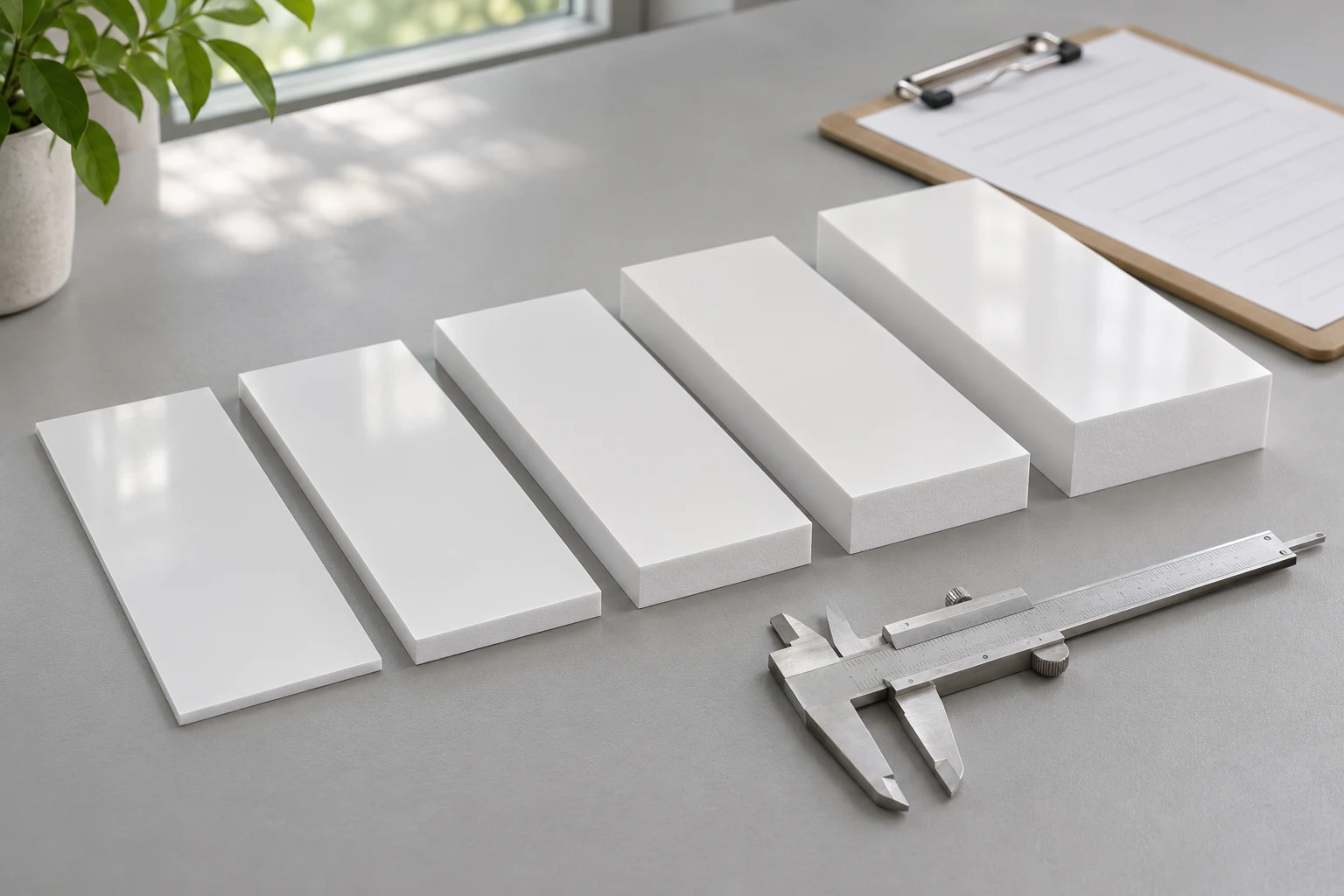
Keep one approval record for each specification
Give the sample a reference that can be quoted in emails, the purchase order and repeat enquiries. If two thicknesses or finishes are being assessed, keep separate records. A photograph alone can lose the connection between the approved face and the board grade.
| Record | What to confirm | Why it matters |
|---|---|---|
| Sample reference | Date, supplier reference and buyer reference | Connects approval to the correct piece and quotation. |
| Board specification | Grade, nominal thickness, requested density and sheet size | Prevents approval of a face without agreement on the underlying board. |
| Surface | White or decorative face; one or both sides; gloss, texture and film | Makes the visible requirements clear. |
| Edge and processing | Cut-edge appearance, machining trial and proposed edge treatment | Checks whether the board suits the buyer’s own process. |
| Application trial | Actual finish, adhesive or hardware used; observations and limitations | Keeps the approval relevant to the intended component. |
| Decision | Approved, approved with conditions, or further sample required | Records unresolved points before bulk production is confirmed. |
Review the face, core and finished edge separately
View the sample under consistent lighting and describe what is acceptable in words as well as photographs. Screens, lighting and camera settings can change the appearance of white and decorative finishes. Keep a labelled physical reference when appearance is important.
For a laminated board, record the design reference, pattern direction and whether the same finish is required on both faces. The cut edge can expose a white core; confirm how that edge will be finished in the completed part. The laminated interior panel ordering guide explains how to organise these details by component.
Trial the process that matters to your application
Do not treat a sample’s appearance as approval of every later operation. If you will machine a hinge recess, bond a decorative layer or install edge banding, trial that operation with your own tools and consumables. Record the setup so a repeat test can be compared fairly.
- Identify which face will be visible and protect it during handling.
- Use the intended fixing or hinge with the planned component geometry.
- Check the chosen adhesive or finish supplier’s instructions and compatibility information.
- Agree any required test method or acceptance criterion before relying on a result.
Project-specific structural, fire or regulatory requirements need suitable documentation and qualified assessment. A general sample approval is not a substitute for a product-specific test report or compliance review.
Connect the approved sample to the bulk order
After approval, put the sample reference beside the specification in the order confirmation. Include agreed tolerances, visible-face requirements, packing and any special marking. If a detail is still open, resolve it in writing before the order moves forward.
For a repeat order, quote the earlier order and sample references, then identify any changes to thickness, quantity, finish or packing. This is more reliable than requesting “the same white board” when several specifications have been purchased.
SincePlast sample arrangements: standard small samples are normally 10 × 15 cm and free of charge, with courier costs paid by the buyer. Ask us about A4, A3 or other sizes needed for a processing trial. Availability and any special preparation are confirmed with the sample request.
Before you approve: a final check
- Does the sample reference match the quotation and board grade?
- Have both faces and the cut edge been reviewed where relevant?
- Are the actual application trials recorded, with any limitations?
- Are special test or documentation requirements agreed?
- Does the order confirmation identify the approved reference and outstanding conditions?
Use the PVC board RFQ checklist to send the same information with your enquiry. For the wider process, see quality and order support.
Put your specification into an order.
Send your application, board size, thickness, surface requirements and quantity. Our export team will help clarify the details before quotation.