
Home / Resources / Application Planning
Application Planning · SincePlast
Ordering Laminated PVC Boards for Interior Panels
For decorative interiors and shopfitting, the order needs to describe the whole visible result: face, reverse, pattern direction and exposed edge. Organise those details before confirming quantities.
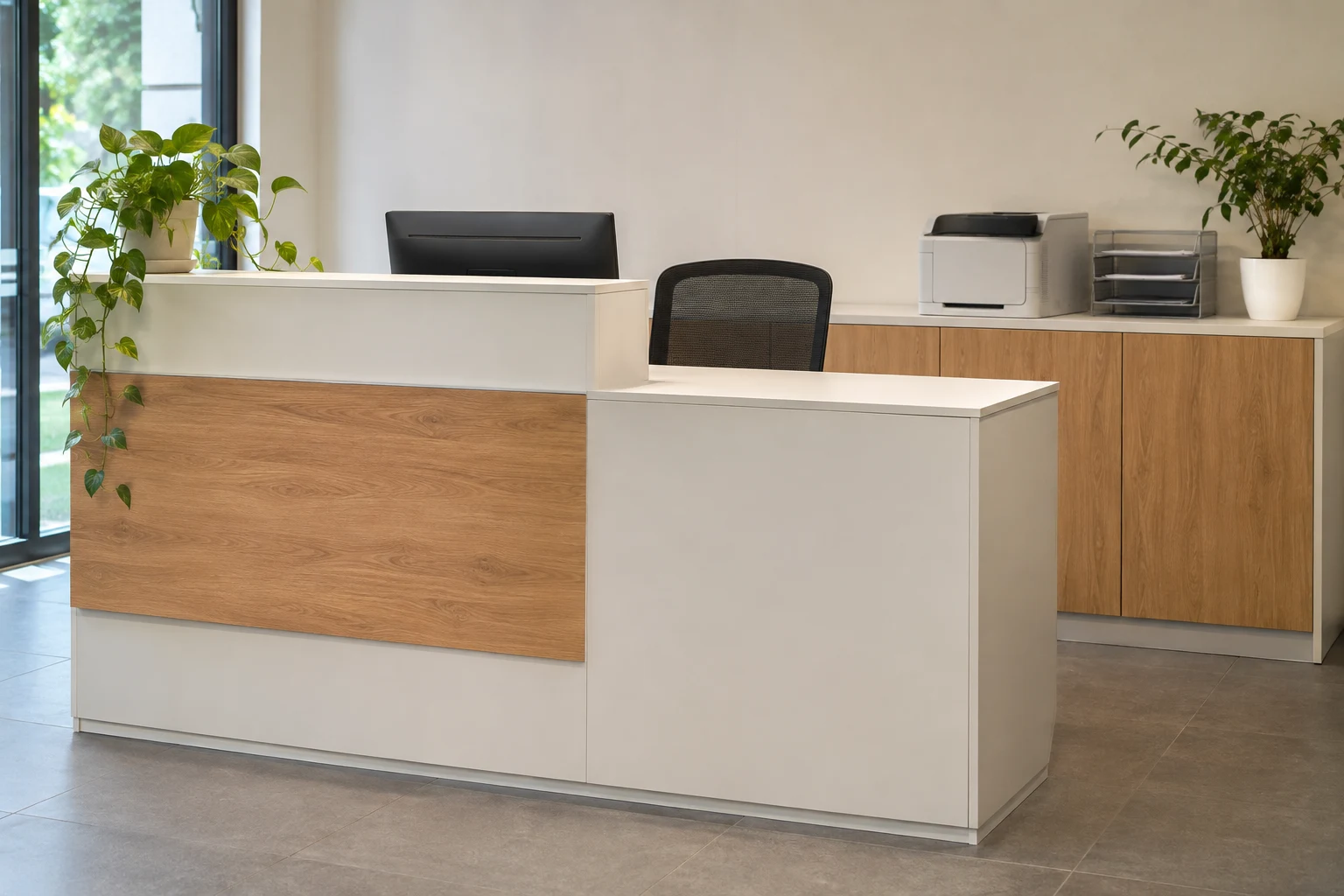
Define the supply scope first
A reception counter, display unit or decorative interior panel may use several materials. Identify exactly which components you are considering for laminated PVC board and whether you are buying full sheets or discussing an additional processing service. Do not assume that a sheet quotation includes fabrication or installation.
Send a marked drawing, a component list or reference photographs with the relevant parts identified. Describe the interior conditions and any project-specific performance or documentation requirements. This gives the export team a clearer basis for the proposed board specification.
Make a finish schedule that follows the drawing
| Schedule field | What to identify |
|---|---|
| Component reference | Drawing number or panel label, dimensions and quantity. |
| Decorative face | Finish reference, colour, texture and the side that will be visible. |
| Reverse face | Whether it is exposed, covered or requires the same decorative finish. |
| Pattern direction | Direction on each part and any required visual alignment between adjacent parts. |
| Exposed edges | Which edges remain visible and the proposed edge treatment. |
| Board specification | Grade, thickness, sheet format and requested density. |
| Approval reference | Physical sample reference and any agreed conditions. |
Approve the decorative face using a physical reference
Screen images are useful for narrowing a selection, but lighting, cameras and displays can alter colour and texture. For appearance-sensitive orders, agree a labelled sample and record the finish reference. Where several components must look coordinated, review them together under comparable lighting.
Discuss the intended relationship between sheets and between project stages. Do not assume that adjacent pieces will have a continuous grain pattern unless that requirement has been reviewed and agreed. Keep approved references for later additions or replacement orders.
Include the white core and edge treatment in the decision
A decorative face does not make the cut core the same colour as the surface. Laminated PVC boards can have a white core that becomes visible at an unfinished edge. Identify those edges on the drawing so the fabricator can plan a suitable treatment.
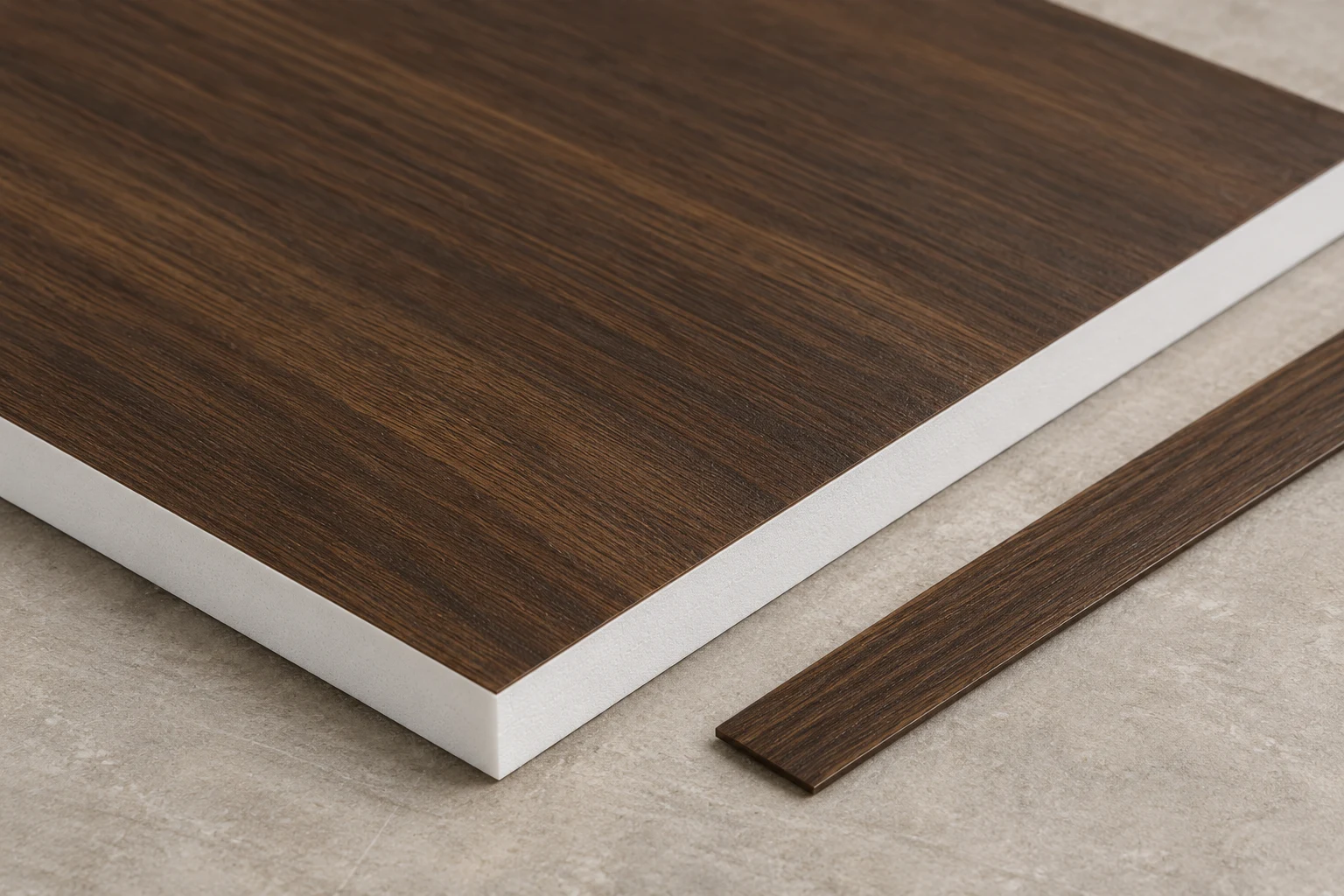
If edge banding or bonding is part of the fabrication route, trial the actual materials, equipment and settings. Confirm compatibility with the relevant consumable supplier. Record which face and edge system were approved so the order and the fabrication team use the same reference.
Group quantities by finish and thickness
Prepare a separate order line for each combination of thickness, sheet size, finish and reverse-face requirement. Pattern direction may change the cutting layout and usable yield. Allow for trimming and machining in the buyer’s cutting plan before converting component quantities into full sheets.
If the order includes plain white boards as well as laminated boards, list both groups clearly. Mixed-container planning depends on the actual specification mix, packing and cargo weight. Confirm the proposed combination before fixing the final purchase quantities.
Check timing, protection and receiving information
Laminated orders commonly need around five additional days beyond the standard-order production estimate. Confirm the actual schedule for the selected finish and quantity with the export team. If a project has a fixed installation date, explain that date and the required destination port at the enquiry stage.
Agree protective-film requirements, face identification, packing and marking. Ask for pallet or carton pricing when needed; standard plastic-bag packing and optional packing should be compared on a clearly stated basis.
Keep one reference through quotation, approval and delivery
Use the same finish and component references in the enquiry, approved sample record, purchase order and receiving check. If something changes, such as a reverse-face finish or pattern direction, identify it explicitly rather than replacing a photograph without explanation.
Explore laminated PVC foam board options, prepare the RFQ checklist and record the sample approval before confirming a bulk order.
Put your specification into an order.
Send your application, board size, thickness, surface requirements and quantity. Our export team will help clarify the details before quotation.