
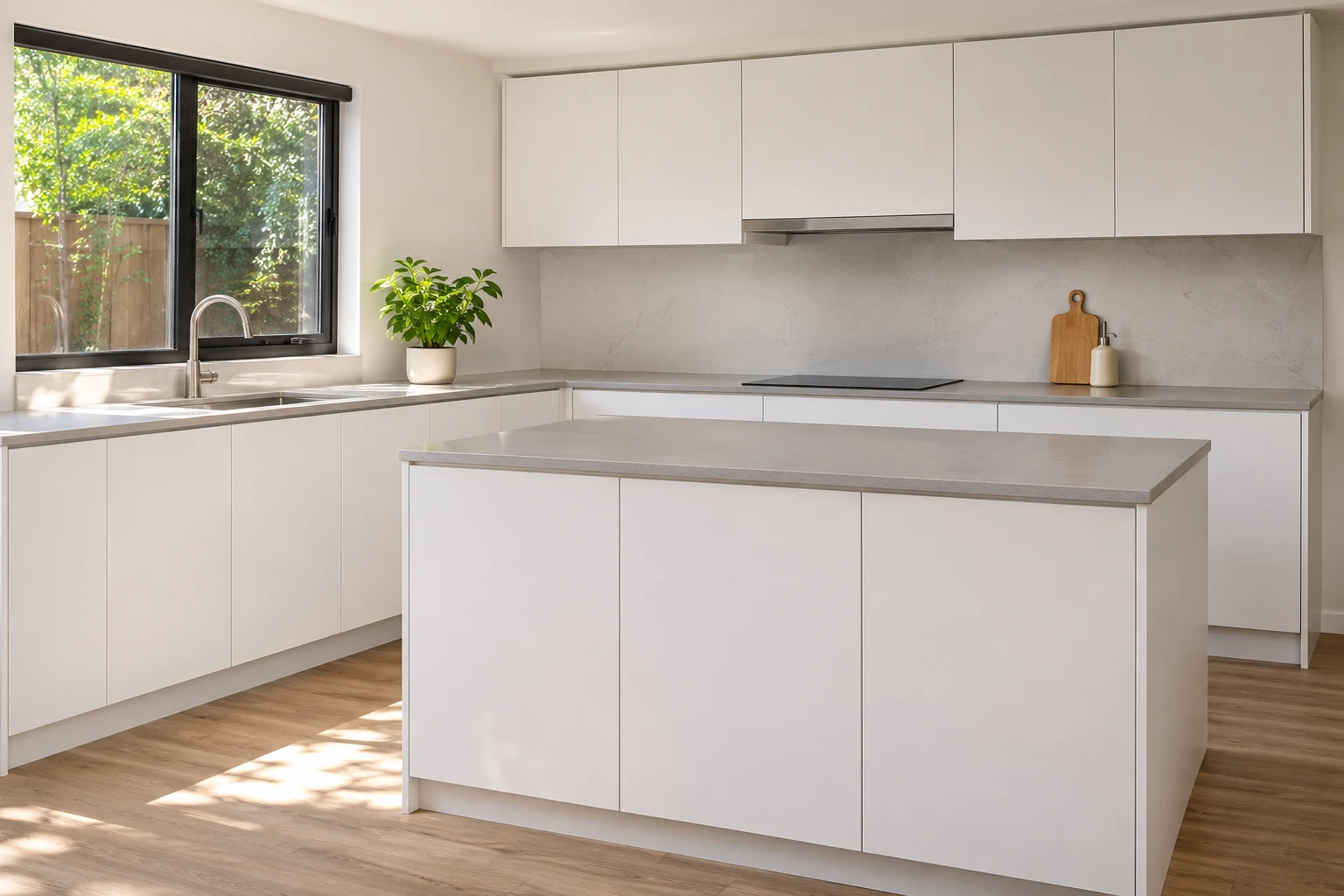
Build the enquiry around a component schedule
A kitchen contains parts with different sizes, visible faces and fixing details. Before asking for one board specification for the whole cabinet, list the components you intend to make from PVC board. Identify which parts carry hardware, which have exposed edges and which will be covered by another finish.
The schedule does not need to be complicated. A spreadsheet or clearly labelled drawing can connect each component group to a proposed sheet specification. This helps avoid ordering one thickness or finish by habit when the cabinet design calls for several.
| Component group | Record before quotation | Confirm by sample or design review |
|---|---|---|
| Side and divider panels | Finished dimensions, visible faces, fixing locations and quantity | Proposed board grade, machining and joint details. |
| Doors and drawer fronts | Face finish, reverse face, edge finish and hardware layout | Surface reference, hinge arrangement and completed-part trial. |
| Shelves and bases | Dimensions, support arrangement and intended loading | Suitability of the component design for its use. |
| Back panels and infill pieces | Fit, fixing method and appearance requirements | Thickness and processing needs for the actual design. |
| Visible end panels | Colour or pattern direction and exposed edges | Coordination with doors, adjacent panels and edge treatment. |
Discuss the board grade against the finished part
PVC cabinet board is the starting point for a cabinet enquiry. Celuka, co-extruded and laminated options should be discussed against the required face, edge and processing route. The product name alone does not approve a particular cabinet design.
Tell the export team the intended thickness and requested density, or explain which requirements are still open. Do not choose a board only because a sample feels heavier or because another buyer uses the same nominal thickness. Component dimensions, support, hardware and machining also affect the final result.
Specify every face and exposed edge
A white cabinet can still have several appearance requirements. Note whether both faces are visible, whether the board will be coated or laminated later and which cut edges remain exposed. If a decorative finish is supplied, label the pattern reference and direction on the drawing.
For a laminated board, a cut edge can reveal the white core. Decide how that edge will be covered or finished before calculating the order. Include edge-banding trials in the sample plan where relevant. This helps connect the appearance of the supplied sheet to the finished door or panel.
Test the actual hardware arrangement
When hinges, drawer fittings or other hardware are part of the application, use the intended hardware in a representative component trial. Record hole positions, recess depth, fixing method and the board specification. A small unmachined sample cannot establish the performance of an assembled cabinet.
The cabinet maker or project designer should confirm the final component design and any required tests. Share specific acceptance requirements early so the proposed board and supporting information can be reviewed before the purchase order is placed.
Translate the parts list into sheet quantities
State whether the quotation is for full sheets or for a separately agreed processing scope. For full-sheet supply, the buyer’s cutting plan should account for trimming, saw kerf, pattern direction and usable offcuts. Keep quantities separate for each thickness and finish.
The standard sheet size is 1220 × 2440 mm. If the cutting plan depends on another format, ask about availability for the proposed grade before treating it as an order assumption. Different sheet sizes can change cutting yield, packing and loading.
Approve the reference, then confirm the order
- Send the component schedule and identify the visible surfaces.
- Confirm the proposed board grade, dimensions and finish for each line.
- Request samples suited to the processing and hardware trials.
- Record the approved sample, appearance reference and any conditions.
- Confirm sheet quantities, packing, marking and shipment requirements in writing.
Use our RFQ template for the enquiry and our sample approval record before bulk-order confirmation. These steps also create a useful reference for the next kitchen programme or repeat stock order.
Put your specification into an order.
Send your application, board size, thickness, surface requirements and quantity. Our export team will help clarify the details before quotation.