
PVC Foam Board Range
PVC Cabinet Board
PVC foam board for kitchen and bathroom cabinets, shelves, partitions and furniture panels where moisture resistance and practical fabrication are important.
- Common 12, 15 and 18 mm
- Regular size 1220 × 2440 mm
- Common densities 0.55 / 0.60 / 0.65 g/cm³
- Color and surface customization
Final thickness, density, dimensions, surface finish and packing are confirmed against the selected production grade before order.
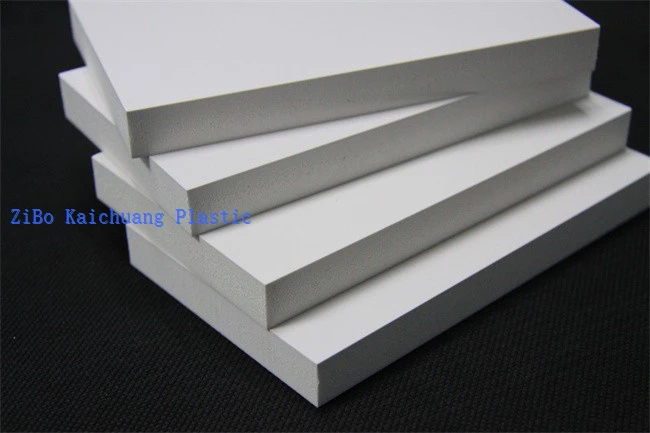
Product Overview
Select the board around the cabinet design
PVC cabinet board is used for cabinet and furniture components in indoor environments where moisture resistance, cleanability and practical processing matter. Density and thickness should be chosen according to panel span, fixing method, hardware and the finished cabinet design rather than using one specification for every application.
Moisture-resistant PVC material
Suitable for selected kitchen, bathroom, laundry and other humid indoor cabinet applications.
Panel rigidity options
Higher-density grades may be selected when stiffness and screw fixing are more important.
Flexible fabrication
Can be cut, drilled, routed, CNC machined, laminated, painted and screw-fixed with suitable grade selection.
Technical Reference
Specifications and customization
Use these values as a starting point for discussion. Confirm the final grade and tolerances before production.
| Material | PVC foam board |
|---|---|
| Common cabinet thicknesses | 12 mm, 15 mm and 18 mm |
| Available thickness | Common cabinet choices: 12, 15, 16, 17 and 18 mm. Select by component design. |
| Regular sheet size | 1220 × 2440 mm |
| Large sheet sizes | 1560 × 3050 mm and 2050 × 3050 mm |
| Density | Specify the density required for the cabinet design; avoid selecting solely by sheet weight or price. |
| Common cabinet density | 0.55, 0.60 and 0.65 g/cm³; 0.70 g/cm³ available for suitable orders |
| Color | White, black, red and customized colors |
| Surface | Smooth surface, hard-skin surface or laminated surface options |
| Processing and packing | Cutting, drilling, CNC routing, engraving, laminating and screw fixing. Standard plastic bag packing is included. Pallet or carton packing is available at an additional cost. |
Select the board by thickness, density and application. The quotation specifies the agreed sheet size, tolerances, finish and packing.
Cabinet Component Planning
Choose the specification for each cabinet part
A cabinet combines panels with different jobs. A back panel, a hinged door and a loaded shelf should not automatically use the same board. Begin with the component drawing, then agree the thickness, density and fixing details.
| Cabinet component | Specification to discuss | Design check before ordering |
|---|---|---|
| Carcass sides and partitions | Common 15, 17 or 18 mm; density options 0.55 / 0.60 / 0.65 g/cm³ | Check panel dimensions, joining method and hardware positions on a sample assembly. |
| Doors and drawer fronts | Select thickness for hinge or runner hardware; plain or laminated faces | Check screw engagement, door weight, alignment and the appearance of exposed edges. |
| Shelves and horizontal panels | Select thickness and density together with the unsupported span | Confirm expected contents and support spacing. A thicker or denser board alone is not a load rating. |
| Back panels and drawer bottoms | Choose the board to fit the groove, frame or fixing arrangement | Confirm the finished panel size, support around the edges and the actual load. |
These are discussion points for indoor cabinet design. Final component performance needs verification with the actual hardware, joints and installation.
Interior Applications
Cabinets for humid indoor spaces
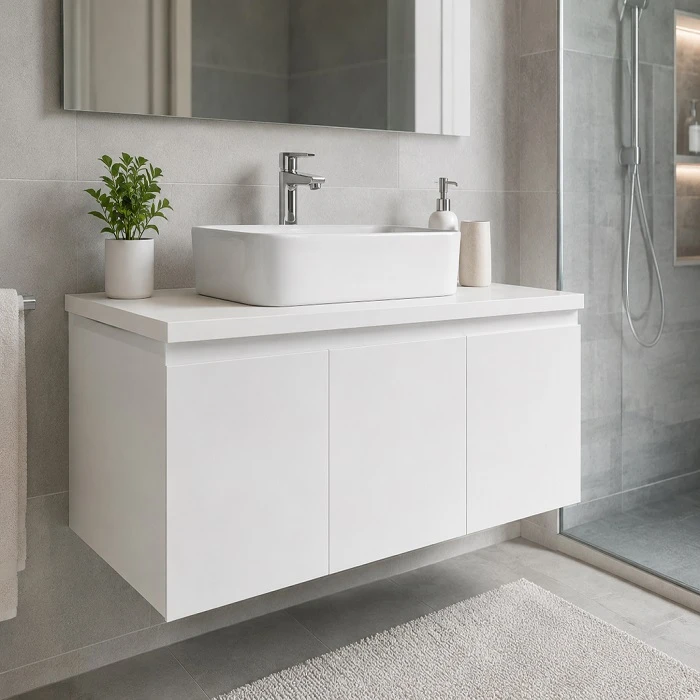
Bathroom vanities and laundry storage
PVC cabinet board offers a moisture-resistant panel option for vanity carcasses, storage units and laundry furniture. Specify the fixing arrangement around basins, pipe openings and wall brackets, together with the required surface finish.
Kitchen, wardrobe and utility components
Use the component list to separate visible doors and sides from internal partitions and backs. For shelves, share the span and intended contents. For doors, share the hinge pattern and finished dimensions so the sample can represent the real assembly.
A plain white board can be fabricated directly, while a decorative finish can be selected from the laminated PVC board range.
Sheet Weight Reference
Compare weight at the same size and thickness
Density affects handling and purchasing comparisons. The figures below are theoretical board weights for a 1220 × 2440 mm sheet, excluding film and packaging.
| Thickness | 0.55 g/cm³ | 0.60 g/cm³ | 0.65 g/cm³ |
|---|---|---|---|
| 12 mm | 19.65 kg | 21.43 kg | 23.22 kg |
| 15 mm | 24.56 kg | 26.79 kg | 29.02 kg |
| 17 mm | 27.83 kg | 30.36 kg | 32.89 kg |
| 18 mm | 29.47 kg | 32.15 kg | 34.83 kg |
Calculation: 2.9768 × thickness in mm × density in g/cm³ = kg per sheet. Actual weight varies with agreed dimensions, density and thickness tolerances. Weight is not a substitute for a cabinet load or screw-holding test.
Fabrication Planning
From full sheet to a fitted cabinet
Use a production sample to check the complete component, including its edge, fastening and visible finish.
Plan the cutting list
Mark finished dimensions, visible faces and hardware positions before nesting the parts. Allow for saw kerf, trimming and any edge banding used by your workshop.
Trial the cut and routed edge
Check the selected sheet with your saw or CNC tooling. Review edge finish, hole accuracy and fit before cutting the full batch. Keep the face protected during handling.
Verify screws and hinges
Use the actual screw, hinge or connector on the selected density. Check pilot holes, edge distance and tightening on a sample; avoid assuming a fitting used in another board will perform identically.
Assemble and finish a sample
Check alignment, joints, shelf support and access around plumbing. Trial any adhesive, paint or edge banding against the actual PVC surface before production.
Production & Export Support
Agree the order details before production
A clear specification makes quotations easier to compare and repeat orders easier to match. Use the following points when approving the sample and purchase order.
- Panel thickness and machining fit
- Check the selected thickness against grooves, hinges and connector dimensions.
- Hardware and density
- Record the agreed density and use the actual screw or hinge for sample verification.
- Visible surfaces and edges
- Agree the face finish, acceptable appearance and edge treatment before a repeat order.
- Cutting list and packing
- Separate each thickness and finish in the order list; state whether panels or full sheets are required.
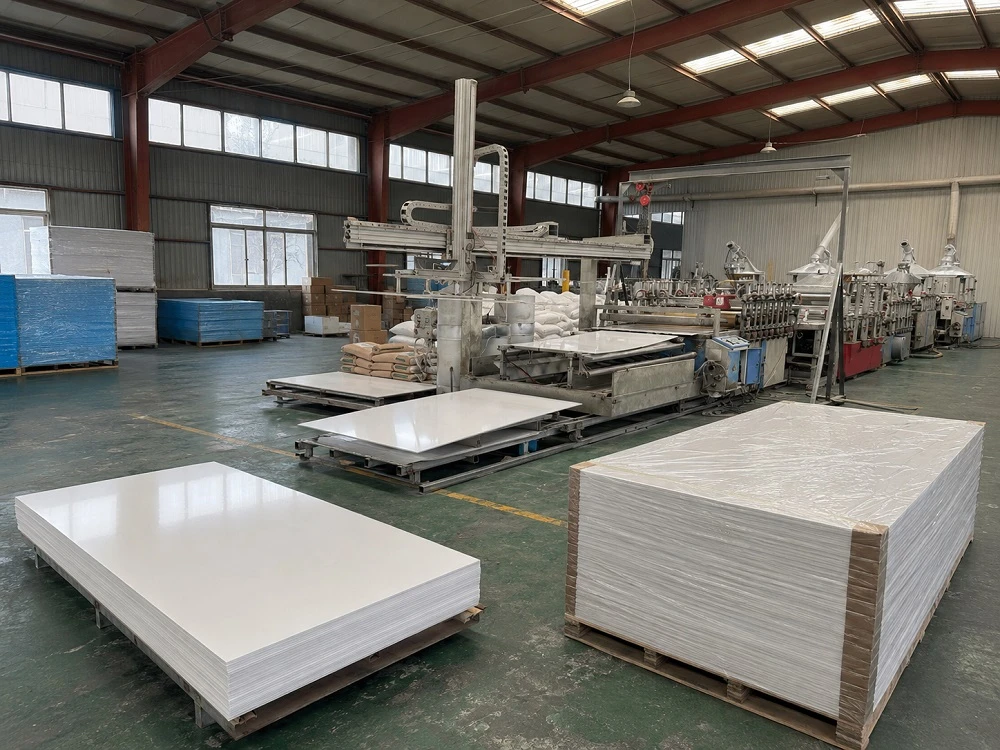
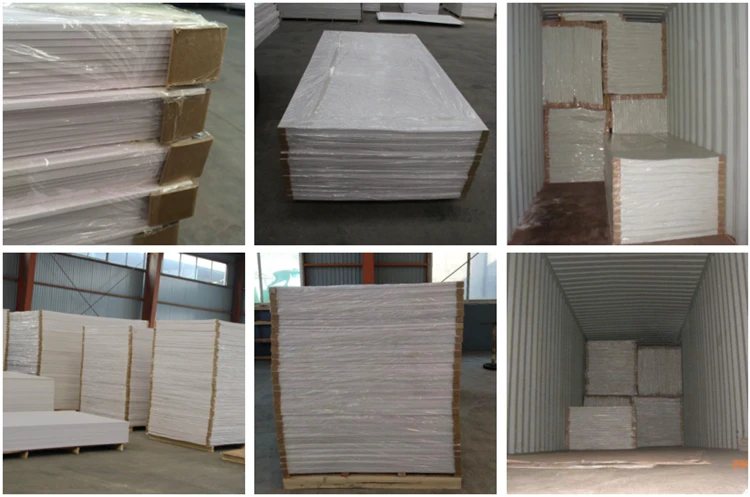
Factory supply and sample review
SincePlast is the export showcase of Zibo Kaichuang Plastic Co., Ltd., a PVC foam board manufacturer in Zibo, Shandong. Discuss the sample specification before moving to a full order. Standard samples are free, with courier charges paid by the buyer; larger sample sizes can be discussed.
Packing, mixed loads and delivery
Standard plastic bag packing is included. Pallets and cartons cost extra; protective film is confirmed by agreement. Different sizes and thicknesses can be mixed in a full container. Typical base-board lead time is 7–15 days, with the final schedule confirmed for the specification and quantity.
Practical Buyer Questions
Frequently asked questions
What density is commonly used for cabinet panels?
0.55, 0.60 and 0.65 g/cm³ are common options. Select the density with the component thickness, unsupported span and fixing design. Share the hardware and drawing if screw fixing is important.
Can it replace plywood at exactly the same thickness?
The material and fixing behavior differ. Review the cabinet design and make a representative assembly rather than assuming an identical thickness gives an identical result.
Does a moisture-resistant board make the whole cabinet waterproof?
The board is moisture-resistant, but the finished cabinet also includes joints, fittings, edges and installation details. Design and inspect those parts for the intended bathroom or kitchen conditions.
Can the faces have a woodgrain finish?
Yes, decorative laminated options can be discussed. Confirm the pattern, face arrangement, base board and edge treatment from a physical sample.
Can several cabinet specifications be loaded together?
Different thicknesses and sizes can be mixed in a full container. Provide a separate quantity for each specification so the packing and loading plan can be reviewed.
Product Inquiry
Need help selecting the right board?
Share your intended use, required thickness, dimensions, density, finish and quantity. We will review the details and recommend a specification for quotation.